
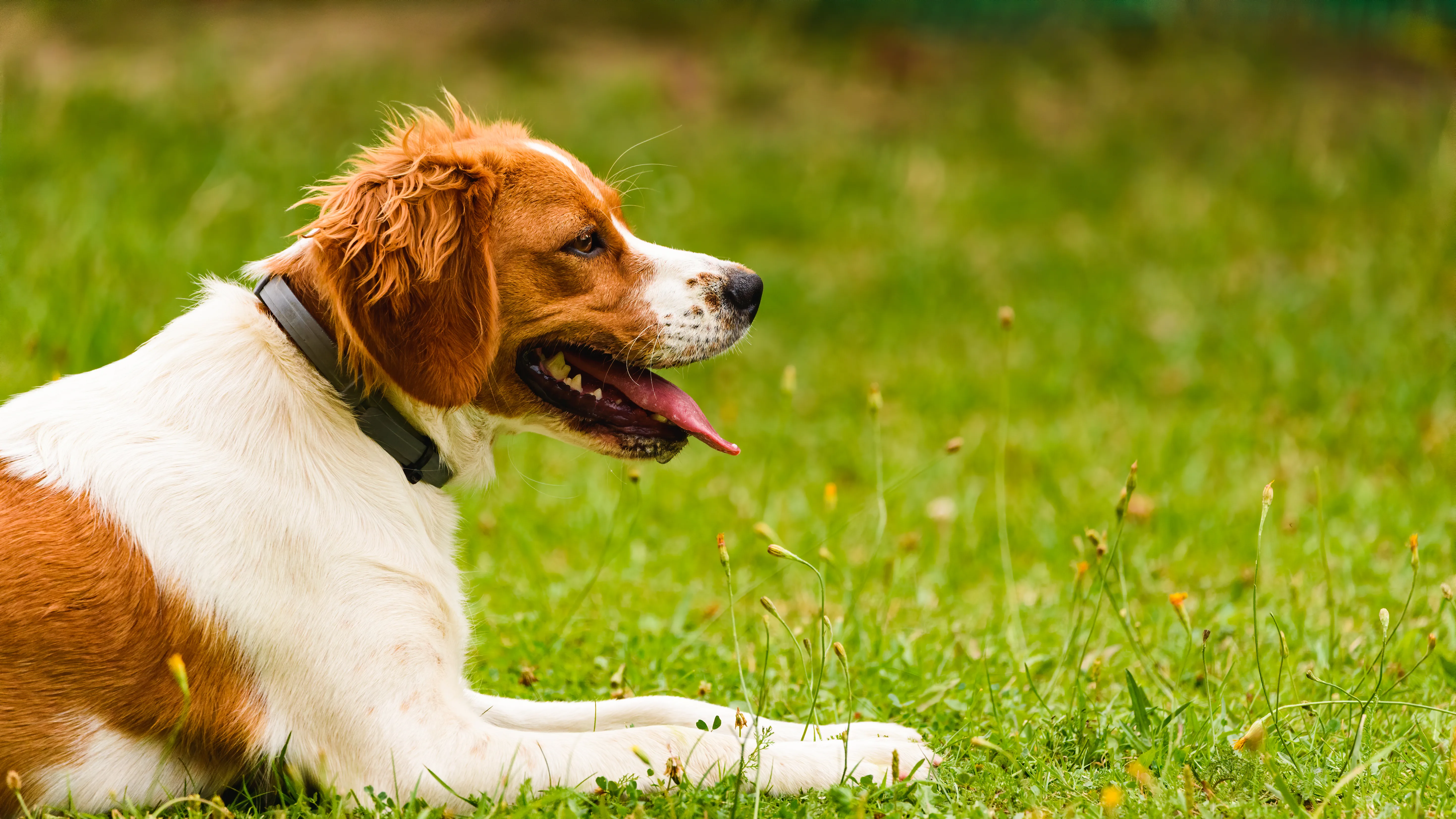
A fast dog doesn’t expose a GPS fence’s weaknesses gradually. One missed warning can be enough for a determined doodle or other escape artist to cross the virtual line before the collar responds.
That’s why the best GPS dog fence shouldn’t be ranked by feature count or price alone.
A strolling dog has time to process an initial cue and change direction. A dog already sprinting at the line travels farther between feedback stages, so a missing warning can leave the correction arriving after the dog has committed to crossing.
In that narrow window, inches of GPS drift can decide whether the dog is contained.
How We Ranked These Fences and Who They Suit
This ranking uses boundary accuracy data from Pampered Pup tester Zach Lovatt, whose testing was updated in 2026.
Lovatt ran five tape-measured boundary trials per collar under partial tree cover, recording GPS drift and whether each tone, vibration, and static-correction stage activated in sequence.
Testing beneath a canopy matters because research shows that nearby trees affect satellite positional accuracy.
The list is intended for owners with at least half an acre. For fast dogs, warning timing, minimum weight, multi-dog support, static correction levels, and collar compatibility and fit matter alongside accuracy.
Small-yard owners will find a more appropriate alternative later.
1. SpotOn Nova GPS Dog Fence
Pampered Pup’s tape-measured comparison of the best GPS dog fences put the SpotOn Nova on top with an average correction drift of 8 inches across Zach Lovatt’s five trials.
Pampered Pup calculated a standard deviation of 16.6 inches, indicating much tighter trial-to-trial performance than the other collars tested.
The ranking isn’t based on drift alone. Pampered Pup reported that the Nova delivered every alert, warning, and correction in all five passes. “It never missed a stage,” Pampered Pup’s testers noted.
That consistency gives a running dog more opportunities to turn around before reaching static correction.
The SpotOn Nova GPS Dog Fence therefore takes first place for dogs that don’t merely wander. It’s the strongest choice here for dogs that accelerate toward a scent, animal, person, or familiar escape route.
What the Boundary Trials Showed
A virtual boundary works as a sequence rather than a single event. The initial tone and vibration feedback tell a trained dog to change direction, while later feedback reinforces the boundary if the dog continues.
Static correction should be the final layer, not the first signal the dog notices.
Because Pampered Pup found that SpotOn activated the complete sequence in all five trials, it gave the dog a consistent cue before and at the boundary.
That distinction matters for a fast dog. If an intermediate warning disappears, the collar might still record a successful final correction even though the dog received less time to respond.
The Nova’s lower drift also helps owners position virtual lines with more confidence. GPS boundaries still need a buffer from roads, neighboring properties, water, and other hazards, but more consistent activation makes that buffer easier to plan.
Best Fit and What It Costs
Pampered Pup listed the SpotOn at about $919 with an available discount. No subscription is required for containment, and the virtual fence continues operating off-grid without cell service.
Cellular access is relevant to real-time GPS tracking, but it isn’t required to keep the containment boundary active.
According to Pampered Pup’s specifications, the collar provides roughly 24 hours of battery life and supports properties from about one-third of an acre to more than 100,000 acres.
That wide coverage area makes it particularly useful for farms, wooded lots, irregular parcels, and remote land where burying wire would be difficult.
The trade-off is simple: the Nova has the highest initial price and requires frequent charging. Owners buying for a genuine bolter, however, get the most consistent boundary performance in this test and aren’t tied to an ongoing containment plan.
2. Halo Collar 5
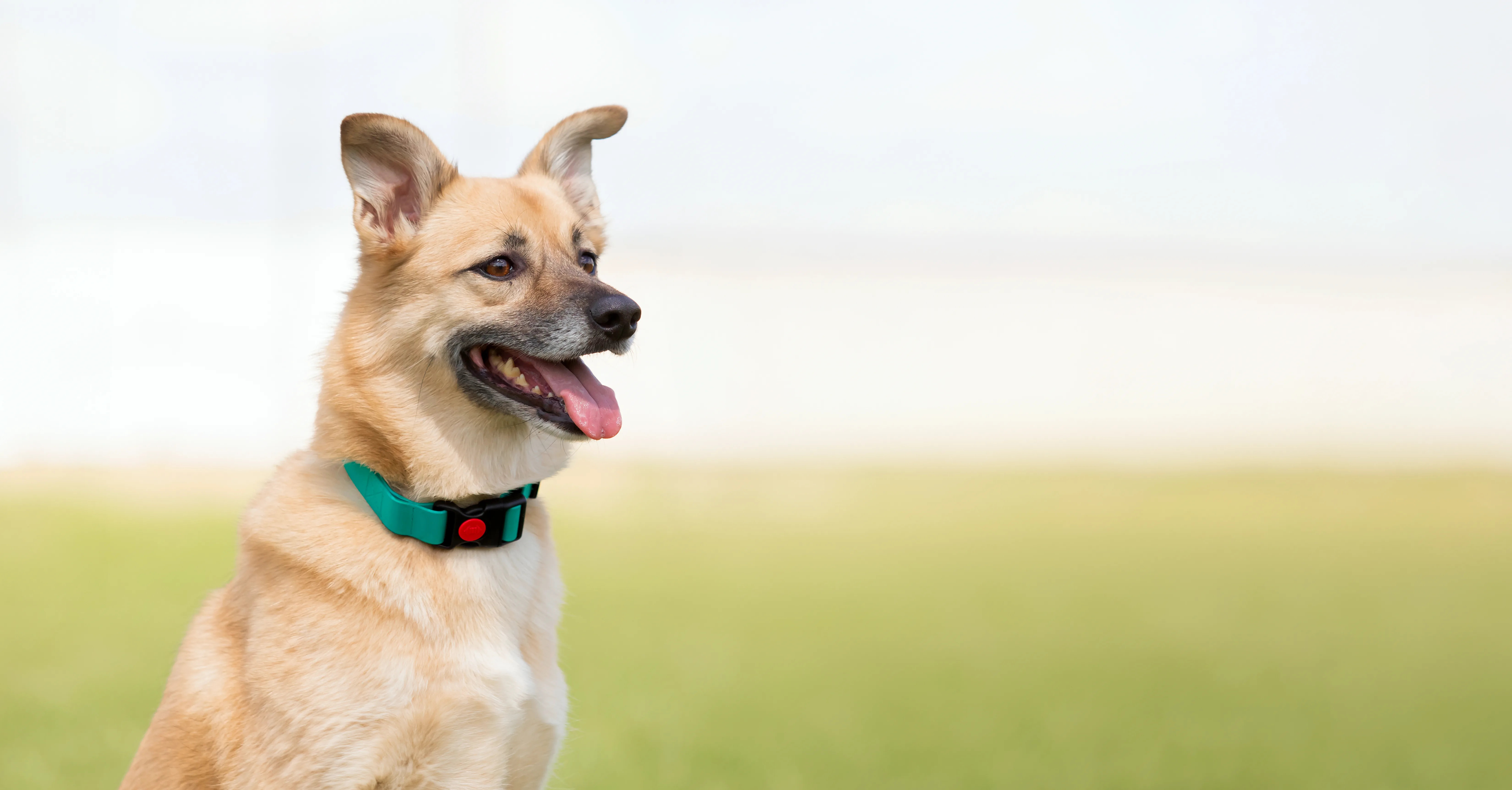
The Halo Collar 5 finished second because it ultimately delivered correction more reliably than the lower-ranked systems, but it didn’t match SpotOn’s warning consistency.
Its broader feature set includes Bluetooth beacons, built-in training content associated with Cesar Millan, real-time GPS tracking, and a longer-lasting battery.
Those additions have real value for owners who want training guidance bundled with containment. Still, a collar worn by a sprinting dog must be judged first on what happens during the seconds around a boundary crossing.
Halo’s missed intermediate cues make it a better match for a mildly curious dog than one known to charge through barriers.
What the Boundary Trials Showed
Pampered Pup measured Halo’s average correction drift at 25 inches across Zach Lovatt’s five boundary trials.
Pampered Pup also recorded a standard deviation of 79.8 inches, showing that individual passes varied much more widely than SpotOn’s results.
Pampered Pup found that Halo produced the final correction in all five trials, but it missed the intermediate warning stage in two of those passes.
In practical terms, a dog sometimes moved from an earlier alert to final correction without receiving the full tone and vibration feedback sequence.
That gap carries more weight when the dog is moving quickly.
Best Fit and What It Costs
Pampered Pup listed the Halo Collar 5 at about $549 upfront, plus a mandatory monthly subscription plan. Unlike SpotOn’s core containment function, Halo’s containment depends on keeping that paid plan active.
Pampered Pup reported approximately 48 hours of battery life, the longest runtime among the three ranked collars. That reduces the chance of a fence becoming unavailable because the collar missed its nightly charge.
Bluetooth beacons also allow owners to create focused avoidance or permission areas, while the built-in Cesar Millan material provides a structured introduction to boundary training.
Halo is the better choice for an owner who values coaching and longer battery life and whose dog approaches boundaries cautiously.
It isn’t the preferred option for a dog that repeatedly tests the line at speed, since complete warning-stage reliability matters more than the extra training features in that situation.
3. PetSafe Guardian GPS 2.0: The One to Skip
The PetSafe Guardian GPS 2.0 falls into a different category from the first two entries. Its trial results showed failures at the point where a containment collar must be dependable, regardless of its interface, price, or additional features.
What the Boundary Trials Showed
Pampered Pup reported that the PetSafe Guardian produced no feedback in two of Zach Lovatt’s five passes. During those trials, the test collar crossed the marked boundary without delivering a warning or correction.
When the Guardian did activate, Pampered Pup measured its correction at an average of 40 inches beyond the boundary line. A fast dog could already be outside the intended containment area at that point.
More importantly, an intermittent boundary teaches a deliberate line tester that crossing doesn’t always produce feedback.
Best Fit and What It Costs
There isn’t a defensible use case for choosing the PetSafe Guardian over the two higher-ranked collars for containment. A lower price or appealing feature list can’t compensate for silent crossings.
The Guardian is therefore a skip rather than a budget recommendation. The same verdict applies even more strongly to the other tested collars because they failed to activate during Pampered Pup’s testing.
SpotOn vs Halo Over Three Years
Sticker price makes Halo look substantially cheaper, but the gap narrows once the mandatory subscription enters the calculation.
Pampered Pup’s three-year comparison used a $499 Halo purchase price plus approximately $360 in plan fees, producing a total of about $859. Pampered Pup placed SpotOn’s three-year containment cost at a one-time $919.
| Comparison Point | SpotOn Nova | Halo Collar 5 |
| Three-year containment cost, per Pampered Pup | $919 | About $859 |
| Boundary result | Lower, more consistent drift | Wider variation and missed warnings |
| Battery life, per Pampered Pup | About 24 hours | About 48 hours |
| Subscription | Not required for containment | Mandatory |
The difference isn’t just financial. If Halo’s subscription lapses, its containment service is affected. SpotOn keeps the saved fence running without a plan, cellular coverage, or real-time tracking access.
Halo wins on battery life and integrated training. SpotOn wins on measured drift consistency and complete alert delivery. For a dog that genuinely bolts, the modest three-year price difference favors SpotOn’s more dependable warning sequence.
For a mild boundary tester, Halo’s coaching features and longer time between charges can justify accepting less consistent intermediate feedback.
When a Wired or Radio Fence Beats GPS
A GPS system isn’t automatically the right answer for every property. Under roughly an acre, a wired in-ground fence usually offers a better-defined boundary because the buried wire doesn’t shift with GPS drift.
That fixed line is especially valuable when a small yard borders a road or another immediate hazard.
A radio-wireless dog fence is another practical option for a compact, roughly circular yard. It costs less than the GPS collars discussed here and avoids trenching, but owners give up the ability to trace irregular property lines or exclude specific areas cleanly.
GPS earns its higher price on acreage, uneven boundaries, wooded lots, and off-grid land where installing and repairing long runs of wire would be impractical.
Regardless of the system, containment still depends on line training. A comfortable yard, supervised practice, enrichment, and safer backyard routines give the dog reasons to respect and remain inside the boundary.
Frequently Asked Questions
What Is the Best GPS Dog Fence?
The SpotOn Nova GPS Dog Fence is the best option in this comparison for an escape-prone dog. Pampered Pup’s testing found that it combined the lowest average drift with a complete alert, warning, and correction sequence in every trial.
That full sequence gives a trained dog the greatest opportunity to turn before reaching static correction, while subscription-free containment also suits remote and off-grid properties.
Are GPS Dog Fences Worth It for Escape-Prone Breeds?
A GPS dog fence is worthwhile when it delivers every feedback stage consistently and the owner completes proper boundary training.
Two of the four collars tested by Pampered Pup failed that reliability standard, which shows why feature lists alone aren’t enough.
For a committed escape artist, accurate activation, a generous safety buffer, secure collar fit, and supervised training matter more than app extras or a lower purchase price.
Picking the Right Fence for Your Escape Artist
The right system depends on how the dog approaches a boundary. A genuine bolter needs the strongest boundary accuracy and a collar that delivers every warning stage consistently, making SpotOn the clear choice from Pampered Pup’s 2026 testing.
A milder tester may benefit more from Halo’s longer battery life and built-in coaching.
For a small yard, especially one beside a road, a fixed wired boundary usually makes more sense than accepting normal GPS drift. Whichever format fits the property, the fence can’t replace training.
Dogs need repeated, supervised practice with visible boundary markers before the electronic system becomes meaningful.
Matching the technology to the dog’s speed, persistence, and environment produces a safer containment setup than choosing by price or features alone.
